
Sheet vinyl (cushioned)
One continuous, seamless sheet with a soft cushioned backing. Genuinely waterproof, warm underfoot and the most cost-effective way to change a kitchen or bathroom floor.
Best in: Bathrooms, kitchens and utility rooms
Vinyl flooring
Cefn Carpets supplies and fits vinyl flooring, lino and luxury vinyl tile across Wrexham from our Rhosymedre showroom — professional vinyl flooring for kitchens, bathrooms and hallways.
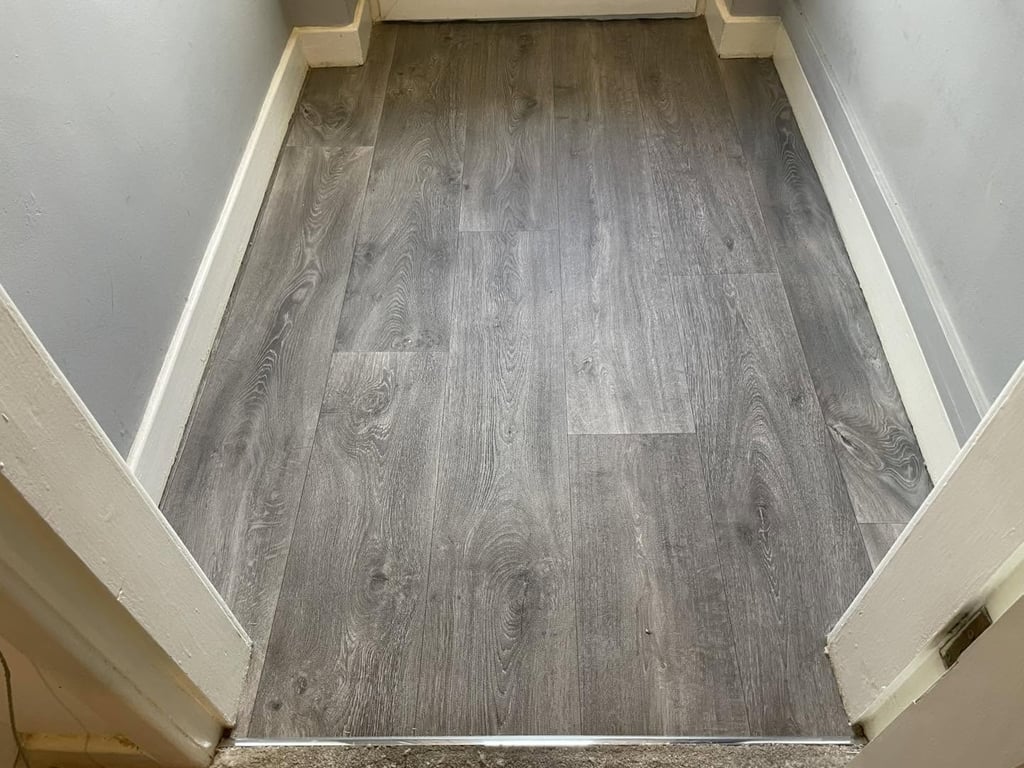
Modern vinyl is a world away from the stuff you remember. Realistic wood planks, stone tiles and bold patterns — all completely waterproof and easy to keep clean. If you call it lino, that is what most people mean these days: cushioned sheet vinyl, cut to fit your room.
We prepare the subfloor properly, cut around every awkward corner and finish with neat door bars, so the result looks like it was always meant to be there.
Spills, splashes and dropped pans — no problem.
Fully waterproof and warm underfoot.
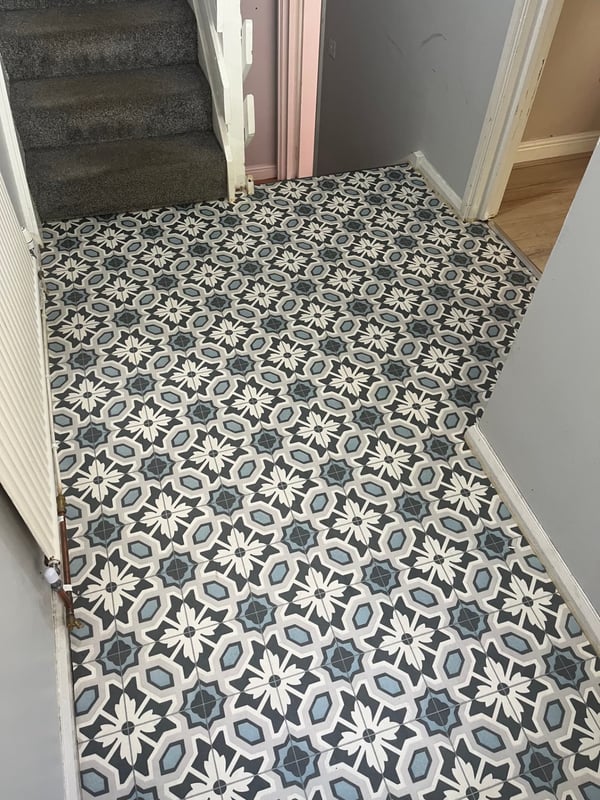
Patterned tiles that make an entrance.
Scratch-resistant and quick to wipe down.
Choosing yours
One continuous, seamless sheet with a soft cushioned backing. Genuinely waterproof, warm underfoot and the most cost-effective way to change a kitchen or bathroom floor.
Best in: Bathrooms, kitchens and utility rooms
Individual planks and tiles with deep embossed grain and bevelled edges. From a short distance it is very hard to tell from real wood or stone, but it is fully waterproof.
Best in: Kitchens, hallways and open-plan spaces
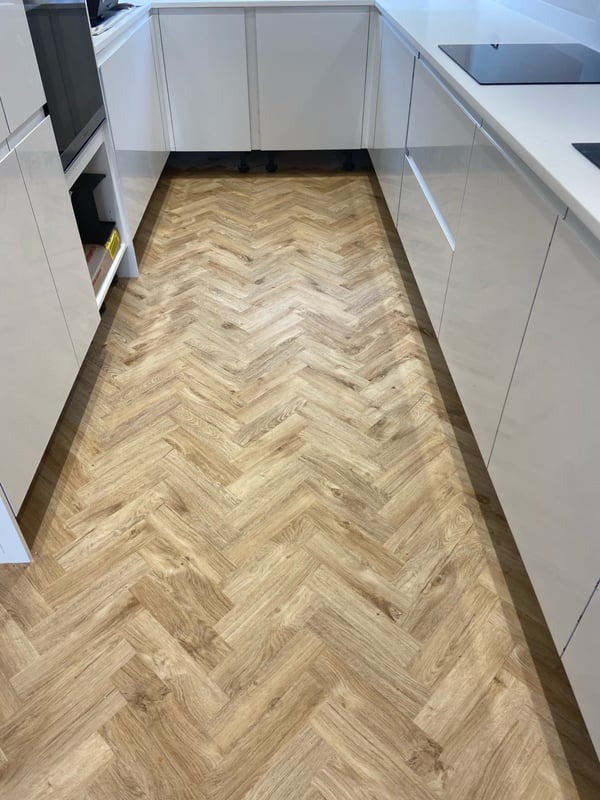
The same LVT planks laid in a herringbone or chevron pattern for a high-end, characterful floor. Takes longer to fit, and it is worth every minute.
Best in: Kitchens and hallways you want to show off
Slate, marble, concrete and traditional patterned tiles — with none of the coldness, grout scrubbing or cracked tiles.
Best in: Bathrooms, porches and period hallways
Click systems float over the subfloor and can be walked on immediately; glue-down gives the flattest, most permanent finish and copes better with underfloor heating and heavy traffic.
Best in: We will recommend based on your subfloor
Textured, slip-rated flooring for wet rooms, bathrooms used by older family members and commercial spaces.
Best in: Wet rooms and accessible bathrooms
How we do it
Come and see full-size samples in the showroom. Wood, stone, patterned or plain — we will show you how each one behaves in a real room rather than a brochure photo.
Vinyl needs accurate templating around units, pipework and door frames. We measure on site, allow for the pattern repeat and give you a written estimate free of charge.
This is the part that separates a good vinyl floor from a bad one. We ply, level or screed as needed, because every lump underneath will eventually telegraph through the surface.
We scribe around kitchen units, toilets, pipes and awkward corners, heat-weld seams where required, and finish the perimeter properly.
Neat thresholds between rooms are included free, so the join between your new vinyl and the next floor looks deliberate rather than an afterthought.
Most vinyl floors can be walked on the same day. We will tell you when it is safe to put appliances and heavy furniture back.
Buying guide
Vinyl flooring is one of the most practical choices for kitchens, bathrooms and hallways — completely waterproof, warm underfoot and available in convincing wood, stone and patterned designs. Here is what to understand before you choose.
Vinyl is a resilient, multi-layer floorcovering made from PVC. It comes as continuous sheet vinyl or as individual planks and tiles (LVT), and both are built up in layers.
Both are vinyl, but they behave differently in a room and are priced differently.
The wear layer thickness is the number worth checking — it tells you how much traffic the floor will take before it starts to show.
For wet rooms and bathrooms used by older family members, slip-rated safety vinyl adds grip underfoot.
Vinyl is thin and flexible, so it follows the shape of whatever is underneath it. Any lump, screw head or gap in the subfloor will eventually telegraph through to the surface.
At Cefn Carpets we help customers across Wrexham, Rhosymedre, Chirk, Ruabon and Llangollen choose vinyl flooring and LVT that suits the room, the subfloor and the budget.
Visit our showroom in Rhosymedre or get in touch to see full-size samples and arrange a free measure and estimate for your home.
Good to know
Yes. Both sheet vinyl and LVT are unaffected by water, which is why they are the go-to choice for bathrooms, kitchens and utility rooms. The subfloor beneath still needs to stay dry, so we always fit and seal edges properly.
Sometimes. Over a sound, flat, well-stuck floor it can be possible, but tiles, floorboards and uneven surfaces normally need plying or levelling first. We will tell you honestly what your floor needs when we measure.
Most LVT and vinyl is compatible with underfloor heating up to a maximum surface temperature — usually 27C. Let us know at the estimate stage and we will make sure the product and adhesive are suitable.
LVT is waterproof, quieter and warmer underfoot; laminate is generally cheaper and has a very hard scratch-resistant surface. For kitchens and bathrooms we would nearly always suggest LVT.
Sheet vinyl is usually fitted in one piece in an average room, so there is no seam at all. Where a join is unavoidable we position it in the least visible place and weld or bond it neatly.
With a good wear layer and sensible care, a quality vinyl floor will comfortably last 15 to 20 years in a domestic setting.
The wear layer is the clear protective coat on top. A thinner wear layer is fine in bedrooms and light-use rooms, while kitchens, hallways and homes with pets or children are better with a thicker one. We match the specification to the room rather than selling one grade for everything.
Almost always. Vinyl is thin and follows the shape of what is underneath, so timber floors are usually plied over and concrete may need levelling. We check the subfloor when we measure and include any preparation in the written estimate.
Yes. Vinyl is waterproof, and for wet rooms or bathrooms where extra grip matters we can supply slip-rated safety vinyl with a textured surface.
Cefn Carpets is a family-run flooring shop in Rhosymedre, near Wrexham, trading for 25 years. We supply and fit vinyl, lino and LVT across Wrexham, Cefn Mawr, Ruabon, Chirk, Llangollen and nearby, using our own fitters rather than subcontractors.
It depends on the room size, the vinyl or LVT you choose and how much preparation the subfloor needs. We measure for free and give you an itemised written quote, so you know the full price before any work starts.
In everyday use, yes — when people ask us for lino they usually mean cushioned sheet vinyl, and that is what we supply and fit. True linoleum is a separate natural product; if that is what you are after, tell us when we measure and we will talk you through the options.
Reviews
98% of 205 Facebook reviewers recommend Cefn Carpets.
Swipe to read more reviews
Real work
Free, no obligation
Honest, friendly advice from a local team — and these always come free.